

Content Optimization Strategies for Maximum Search Engine Visibility: Effective SEO Content Writing and Semantic SEO Techniques
In the digital landscape, achieving maximum search engine visibility is crucial for businesses aiming to attract and retain customers. This article delves into content optimization strategies that enhance search engine rankings and visibility. Readers will learn about the core components of content optimization, the role of semantic SEO, and best practices for effective SEO content writing. Many businesses struggle with low visibility due to ineffective content strategies. By implementing the right optimization techniques, they can significantly improve their online presence. This guide will cover essential topics, including keyword research, on-page optimization, and measuring success in search engine visibility.
Indeed, the strategic application of SEO is widely recognized as a powerful tool for boosting online presence and navigating the competitive digital marketplace.
SEO Strategies for Enhanced Online Visibility
Search engine optimization is an art which helps to improves a website’s visibility in the search engine results. Search engines makes the business environment more transparent and more competitive. For data collection used literature survey. The findings of this study show that using an SEO strategy can significantly enhance product marketing.
Implementation techniques of search engine optimization in marketing strategies through the internet, RB Lukito, 2015
What Are the Core Components of Content Optimization for SEO?
Content optimization for SEO involves several key components that work together to enhance search engine visibility. These components include keyword research, on-page SEO, and aligning content with user intent. Understanding these elements is vital for creating content that not only ranks well but also meets the needs of the target audience.
How Does Keyword Research Enhance Content Optimization?

Keyword research is the foundation of effective content optimization. It involves identifying the terms and phrases that potential customers use when searching for information related to a business’s products or services. By understanding these keywords, businesses can tailor their content to match user intent, leading to higher search rankings. Tools like Google Keyword Planner, SEMrush, and Ahrefs can help identify target keywords, analyze search volume, and assess competition. This strategic approach ensures that content is relevant and discoverable, ultimately driving more organic traffic to the website.
Why Is On-Page Content Optimization Crucial for Search Visibility?
On-page content optimization is essential for improving search visibility. It encompasses various elements, including meta tags, header tags, and keyword placement within the content. Properly optimized on-page elements enhance the user experience and signal to search engines the relevance of the content. For instance, using descriptive title tags and compelling meta descriptions can significantly impact click-through rates. Studies have shown that websites with optimized on-page content experience improved search rankings and increased organic traffic, highlighting the importance of this optimization strategy.
How Does Semantic SEO Strategy Improve Search Engine Visibility?
Semantic SEO focuses on the meaning behind search queries rather than just the keywords themselves. This approach enhances search engine visibility by aligning content with user intent and context. By understanding the relationships between concepts, businesses can create content that resonates more deeply with their audience.
Further emphasizing the importance of understanding content meaning, research highlights how semantic algorithms can evaluate web content quality for search engines.
Semantic Algorithms for Web Content Quality
a semantic algorithm that allows content managers to evaluate the quality of sustainability web contents for search engines, considering the current semantic web space.
“Sustainability-contents SEO”: a semantic algorithm to improve the quality rating of sustainability web contents, MG Confetto, 2021
What Is Semantic SEO and How Does It Differ from Traditional SEO?
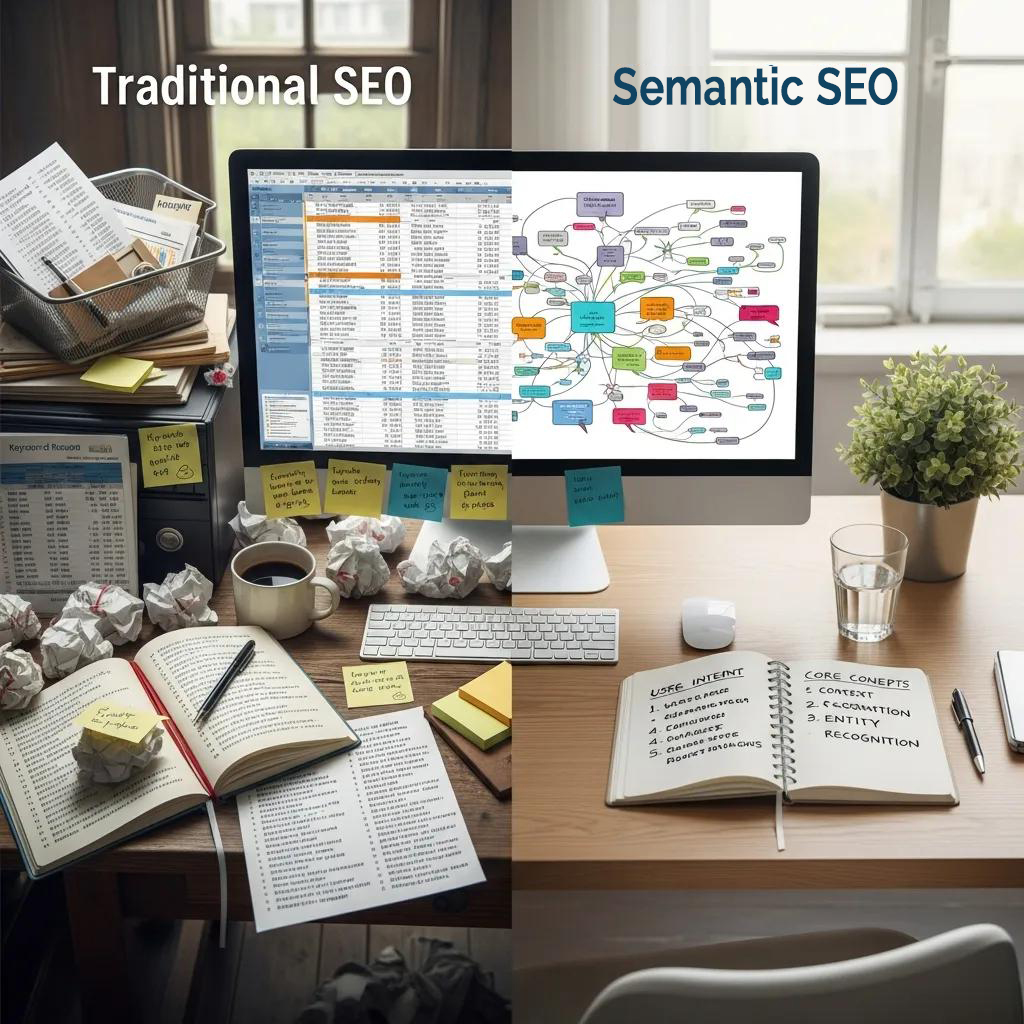
Semantic SEO differs from traditional SEO by prioritizing the meaning and context of search queries. While traditional SEO often relies on keyword density, semantic SEO emphasizes the use of related terms and concepts. For example, instead of focusing solely on the keyword “content optimization,” a semantic approach would include related terms like “SEO strategies,” “user intent,” and “search visibility.” This method allows search engines to better understand the content’s relevance, leading to improved rankings and visibility.
How to Build Topical Authority with Content Clusters?
Building topical authority involves creating content clusters that revolve around a central theme. This strategy enhances SEO by linking related articles, which helps search engines recognize the depth of knowledge on a particular subject. For instance, a business focusing on content optimization could create a cluster of articles covering keyword research, on-page SEO, and semantic strategies. This interconnected content not only improves user experience but also signals to search engines that the website is a valuable resource for that topic.
What Are the Best Practices for SEO Content Writing to Maximize Visibility?
Effective SEO content writing requires adherence to best practices that enhance visibility and engagement. These practices include crafting high-quality, informative content, optimizing for , and utilizing AI-powered content tuning tools.
How to Craft E-E-A-T Compliant Content That Builds Trust?
Creating E-E-A-T compliant content involves demonstrating expertise and authority in the subject matter. This can be achieved by providing well-researched information, citing credible sources, and showcasing author credentials. Additionally, incorporating user-generated content, such as reviews and testimonials, can enhance trustworthiness. A checklist for compliance includes ensuring that content is accurate, up-to-date, and relevant to the target audience’s needs.
How Can AI-Powered Content Tuning Enhance Content Quality?
AI-powered content tuning tools can significantly enhance content quality by analyzing existing content and suggesting improvements. These tools assess readability, keyword usage, and overall engagement metrics. By leveraging AI, businesses can optimize their content for better performance in search engines.
How to Implement On-Page Content Optimization for Better Rankings?
Implementing on-page content optimization involves several actionable steps that can lead to better search rankings. Key elements include optimizing title tags, meta descriptions, header tags, and ensuring proper keyword placement throughout the content. This is where the SiteWyze team shines. Our professionals start with a comprehensive real-person audit, weigh your digital footprint against your key competitors, and then create a plan tailored specifically for you.
What Are the Essential On-Page SEO Elements for Content?
Essential on-page SEO elements include:
- Title Tags: These should be descriptive and include target keywords to improve visibility in search results.
- Meta Descriptions: Compelling meta descriptions encourage users to click through to the content.
- Header Tags: Proper use of header tags (H1, H2, H3) helps structure content and signals its hierarchy to search engines.
By focusing on these elements, businesses can enhance their on-page SEO and improve their chances of ranking higher in search results.
How Does Structured Data Markup Boost Content Visibility?
Structured data markup is a powerful tool that enhances content visibility by providing search engines with additional context about the content. By implementing schema markup, businesses can help search engines understand the relationships between different elements of their content. For example, using structured data for articles can lead to rich snippets in search results, which can significantly increase click-through rates. Implementing structured data is a straightforward process that can yield substantial benefits for search visibility.
How to Measure and Maintain Maximum Search Engine Visibility?
Measuring and maintaining search engine visibility involves tracking key performance indicators (KPIs) and conducting regular content audits. By analyzing these metrics, businesses can identify areas for improvement and ensure their content remains relevant and effective.
Which Key Performance Indicators Track Content Optimization Success?
| Metric | Description | Value |
|---|---|---|
| Organic Traffic | Measures the number of visitors from search engines | High |
| Bounce Rate | Indicates the percentage of visitors who leave after viewing one page | Low |
| Conversion Rate | Tracks the percentage of visitors who complete a desired action | High |
What Are Effective Content Auditing and Refreshing Strategies?
Regular content audits are essential for maintaining search engine visibility. Effective strategies include:
- Content Review: Assessing existing content for relevance and accuracy.
- Updating Information: Refreshing outdated content with current data and insights.
- Identifying Gaps: Recognizing areas where new content can be created to address emerging topics.
By implementing these strategies, businesses can ensure their content remains competitive and continues to attract organic traffic.